Restraint often beats clutter
Perfection is achieved, not when there is nothing more to add, but when there is nothing left to take away.
Antoine de Saint-Exupéry
Although Saint-Exupéry was a poet, he was also an aviator. And what's most interesting about this quote is that it was written from an engineering perspective.
This quote has two main implications:
- Simplicity over excess: meaning that true quality and elegance come from removing the non-essential parts until only what is functional and pure remains.
- Design philosophy: whether it's design, software engineering, or any creative art, it reminds the creators that restraint often beats clutter.
The process
Let's explore the process of creating something with an interesting example.
Let's say that you want to paint a portrait. Where do you start? A lot of people tend to draw the head and then immediately jump onto details: nose, eyes, mouth... And then you step back and look at your painting and see that it's all crooked.
Stepping back and looking at your painting from a distance is extremely useful and important. And that process is exactly the same for any product. The macro perspective is what defines the product. Details add value but do not define it.
Restraint yourself from going into details too soon.
Take a look at these two images for example:

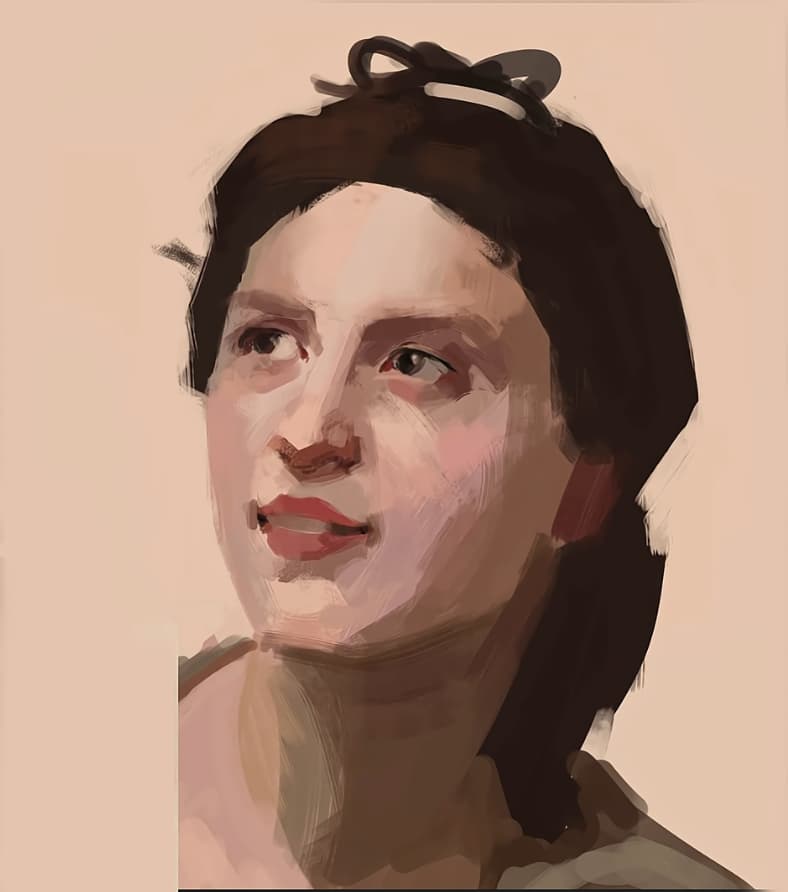
The one on the left has been painted by a master painter. The other one was painted by a self-taught artist in just 30 brush strokes. Now squint your eyes and look at them again. There's almost no difference, right?
Those 30 strokes carry the face on their own, and everything the master adds is there for whoever looks closer. A product wants the same shape: a core that works on its own, with depth available to anyone who wants it and imposed on nobody. Most of the work is deciding what not to build.
Which parts are core
But how do you know what to focus on? How do you differentiate what's a core value and what's a detail?
Importance is the wrong test. Everything on the list is important to whoever asked for it. The test that works is what the decision costs if you take it later: does it stay the same price, or does it get much more expensive?
Anything you can add later for roughly the same effort is a detail. Anything that gets dramatically more expensive the longer it waits is structure.
The shape of the head is structure. So is where the eyes and the nose sit. Yet the eyes themselves are a detail. An important one, but still a detail next to their placement.
I don't always know which is which. When I can't tell, more thinking rarely settles it. So I build the version that is cheapest to undo, but decide up front what it is that could change my mind.